WINDING…
SEVEN STAGES, NO SHORTCUTS.
This is the HORVEN design and build philosophy: how each watch goes from drawing to wrist. Framed as method, not factory mythology.
DESIGN
Every reference begins as hand sketches and ratio studies. Case diameter, lug span, dial aperture, and hand length are fixed before any surface is considered. The review removes one element per round until nothing left can go without breaking legibility.
PROTOTYPE
Drawings become machining prototypes in steel and resin. Proportions are checked on real wrists, photographed at arm's length, argued over. Most prototypes die here, which is the point of prototyping.
CASE
Cases are machined from 316L bar, then brushed, polished, or coated according to reference. Lugs are cut straight, bezels kept narrow. Each case is measured against tolerance before it meets a dial.
DIAL
Dials are cut, finished matte, and printed or fitted with applied indices. Lacquered dials like FORM pass multiple coats with rejection rates the studio accepts as the cost of depth. Text stays minimal: name, movement, nothing else.
MOVEMENT
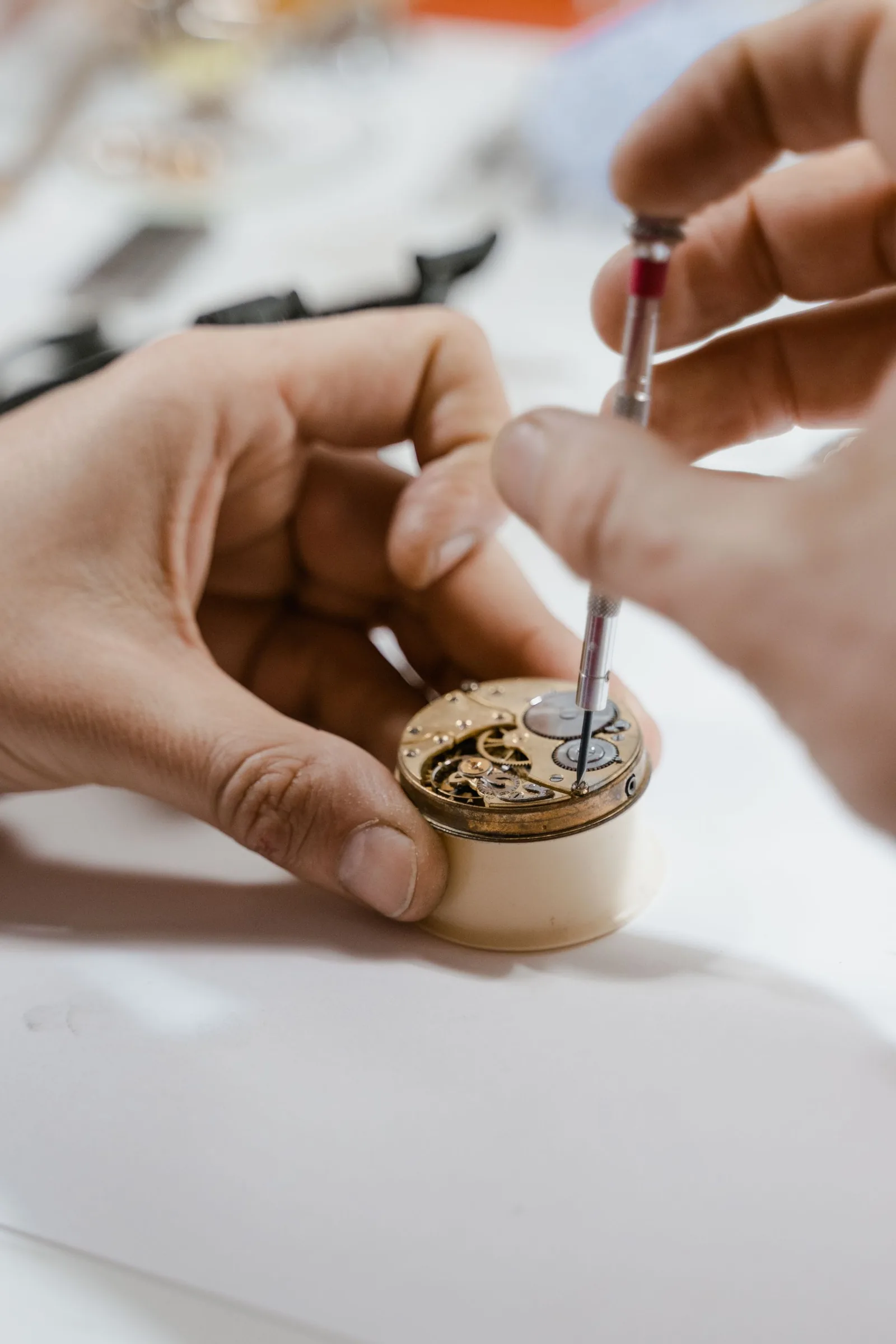
Calibres are assembled, lubricated, and regulated in five positions. HV-01 and HV-02 are finished to be seen through open casebacks: brushed bridges, beveled edges, blued screws where they serve. Decoration that slows service is refused.
ASSEMBLY
Dial meets movement, hands are set to exact clearances, the assembly is cased and sealed. Crowns are tested for action and sealing. Straps are fitted and the watch runs for observation before it is allowed near a box.
TESTING
Rate testing across positions, power reserve verification, pressure testing to rating plus margin, and a final visual inspection under the loupe. A watch that fails any gate returns to the bench. No exceptions, no grading on a curve.