The Anatomy of a Mechanical Watch
Mainspring, gear train, escapement, balance. Four systems, one job. A plain language tour of what actually happens inside the case.
Stored energy
Everything starts with the mainspring, a coiled ribbon of hardened alloy inside a drum called the barrel. Winding tightens the coil. The coil wants to relax, and the watch organizes that relaxation into measured time.
In an automatic, a weighted rotor does the winding. Your wrist moves, the rotor swings, gears carry that motion to the barrel. In a manual wind like CALIBRE, your fingers do it through the crown. Thirty seconds each morning buys 72 hours.
A mechanical watch is a battery that you wind with your body.
Divided down
The gear train, also called the going train, divides the barrel's slow power into usable speeds. Center wheel turns once per hour and carries the minute hand. Third and fourth wheels step it down to the seconds.
The ratios are exact because they have to be. A wheel with one extra tooth would turn the watch into a random number generator. This is why machining tolerances in watchmaking are measured in microns.
Counted out
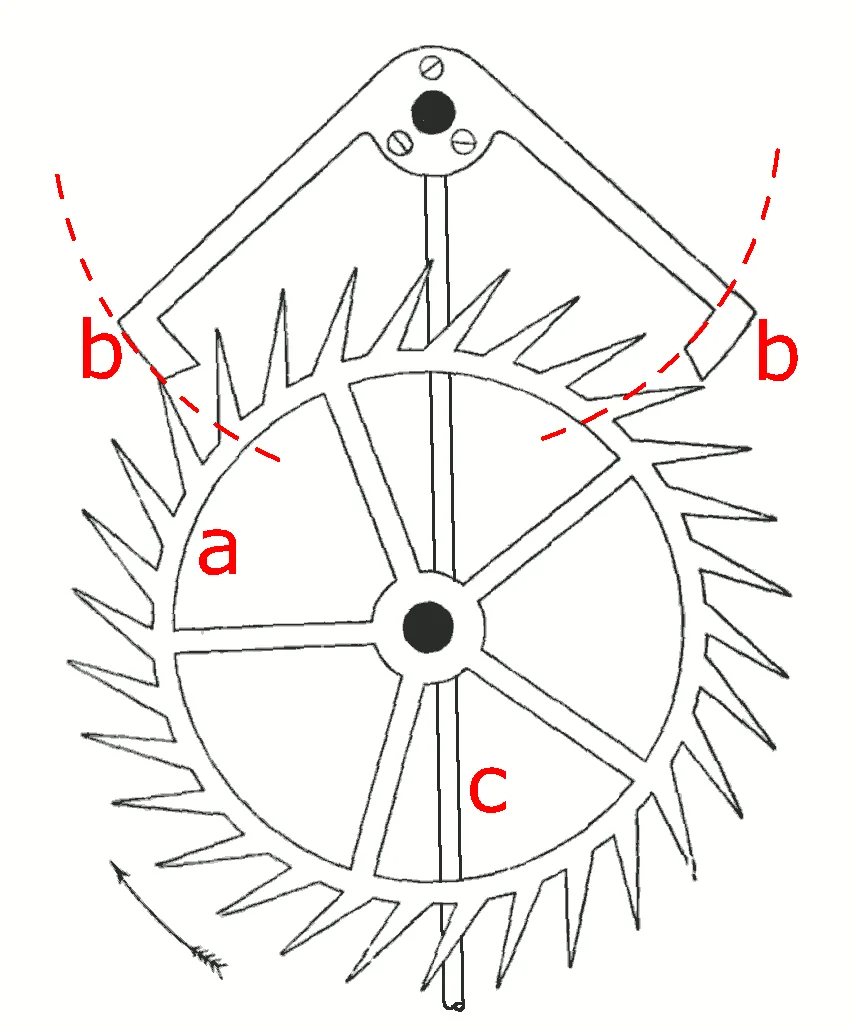
The escapement meters the energy, releasing it in small equal packets. The balance wheel oscillates, commonly 28,800 times per hour in our calibres, and each swing lets the escape wheel advance one tooth.
That controlled stutter is the ticking you hear. Quartz watches tick once per second because a motor steps the hands. Mechanical watches buzz at a frequency your ear reads as a hum.